

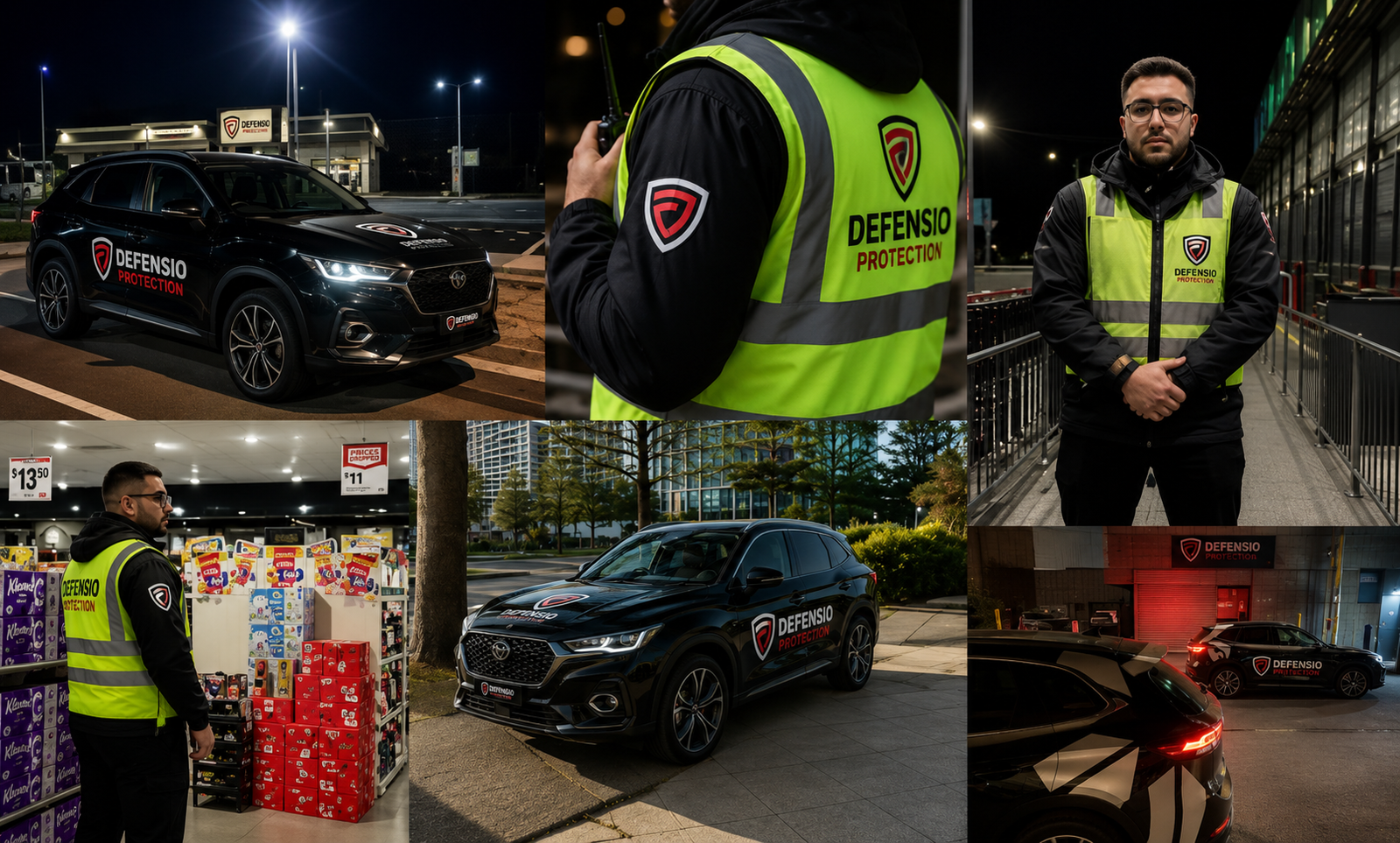
One coordinated approach beats five disconnected fixes. DefensioProtection helps retailers across Australia reduce theft by layering visible licensed guards, live Virtual Monitoring, Fog Security Systems, verified after-hours response and DefensioProtection’s own Mobile Patrols reporting into one coordinated approach — built to suit a single store or a national network.
Retail theft across Australia now spans a wider range of behaviour than opportunistic individuals acting alone. Loss prevention teams increasingly describe organised activity that moves along routes across several stores, alongside after-hours smash-and-grab and ram-raid activity. Liquor, pharmacy, cosmetics and small electronics recur as targets because they resell quickly.
Three local conditions shape the picture.
Leaner floor staffing and self-checkout expansion have changed how supervision appears on the shop floor. Fewer staff means fewer natural sightlines, and self-checkout shifts the point of loss from concealment to under-scanning — harder to spot, harder to challenge.
Late suburban trading hours give bottle shop, convenience and pharmacy formats a risk profile closer to a 24-hour site than a shopping-centre tenancy. They trade well past centre security hours, with one or two staff on and no shared security presence around them.
Site-by-site supplier arrangements mean each incident report lands in a separate system, so a pattern across a route stays harder to see. Four stores can each log the same offender as an isolated event.
DefensioProtection defines Retail Security as the combination of controls that help reduce stock loss and help protect the people working on the floor. It covers four distinct jobs that work together, each closing the gap the one before it leaves open.
Deterrence is designed to influence offender behaviour before an item is taken, delivered by licensed guards at entry points, visible signage and controlled entry paths during staffed trading hours. It is the cheapest form of prevention because nothing is lost — but it only operates while the store is staffed.
Detection identifies theft while it is happening, delivered by live-monitored CCTV and licensed officers deployed in plain clothes. Plain clothes matches where activity is organised rather than opportunistic, since a visible presence tends to displace that behaviour to the next store rather than identify it.
Response brings a competent person to site through alarm monitoring with video verification and mobile patrols. Verification is what separates a genuine breach from a false activation, so attendance is proportionate to what is actually occurring.
Evidence produces a timestamped record supporting authorities, insurers and work health and safety obligations. It is also the layer that makes repeat activity visible across sites, where individual store reports would each read as isolated.
Licensed guards at entry points and high-value departments deter before an item is taken.
Plain clothes officers and live-monitored CCTV address organised activity that waits for
a guard to move on.
Security guards
Video verification confirms an activation before dispatch, filtering the false alarms
retail sites generate. Mobile patrols attend on scheduled and randomised runs with NFC
checkpoint verification.
Alarm response
·
Mobile patrols
The Assist App gives lone staff a fast, timestamped way to report an incident straight
into the National Operations Centre, so every event is logged and actioned to one
standard.
Every incident and patrol is timestamped into one reporting standard, so repeat activity
across a store network reads as a pattern rather than four unrelated events.
An activation is received at the National Operations Centre — staffed continuously, so there is no queue between the alarm and a person.
An operator verifies the activation and assesses it against live CCTV, establishing whether a breach is genuine before anyone is committed to attend.
The confirmed event is assessed for what it actually requires, since a perimeter activation and an offender inside the store call for different responses.
Mission Talk, our dispatch communications platform, sends a guard, a patrol, or escalates to authorities or emergency services, with the operator's assessment passed to whoever attends.
Assist App reporting closes and logs the incident into the same timestamped record used across every site.
Each stage is designed to filter and verify before dispatch, so a genuine event is prioritised and a documented record follows.
Across Melbourne's outer suburbs, DefensioProtection helps deter opportunistic theft during peak evening trade and helps manage smash-and-grab risk on glass shopfronts through alarm monitoring and randomised patrols.
When comparing providers, retailers can work through a short checklist before signing:
Generally yes, when used overtly. Where an employer issues them, the Workplace Surveillance Act 2005 (NSW) requires at least 14 days' written notice to staff, clearly visible cameras and signage, a documented policy, and no coverage of bathrooms or change rooms. Audio carries sharper risk: the Surveillance Devices Act 2007 (NSW) generally requires the consent of all parties to record a private conversation. This is general information only and legal advice should be sought separately.
Observe, record and report — do not pursue or intervene. DefensioProtection's documented observe-and-report approach keeps staff at a safe distance and directs the response to licensed officers, protecting staff from injury, managing psychosocial hazard exposure and preserving the incident record.
Yes. DefensioProtection rosters guards and mobile patrols across a group of stores, concentrating attendance on the time windows and locations where incidents are actually recorded rather than spreading hours evenly.
Monitored CCTV, tightened sightlines and repositioned high-value stock usually deliver more than continuous guarding, with guard hours targeted at the windows where loss concentrates.
Alarm monitoring and video verification cover the site continuously, with mobile patrols attending on randomised runs verified by NFC checkpoints.
Insurers and authorities generally look for a contemporaneous, timestamped record. DefensioProtection's Assist App logs each incident and patrol attendance to one standard at the time it occurs.

As part of our commitment to reconciliation, Defensio Protective Services recognises the Traditional Custodians of Country across Australia and acknowledges their enduring connection to land, sea, and community. In our efforts to help protect the present and future of our communities, we honour their Elders past and present, as well as those emerging, and extend our respect to all Aboriginal and Torres Strait Islander peoples today.